


Understanding the DOT Consortium’s Impact on Technology


A DOT consortium is a group drug and alcohol testing program for transportation employers. A consortium or third-party administrator (C/TPA) usually runs it. For many fleets, a DOT consortium turns records, random draws, notices, and audit files into one clear system.
People may call it a DOT drug consortium, a CDL drug testing consortium, or a drug testing consortium for owner-operators. The main job is simple: help employers meet DOT rules and keep testing work organized.
What is a DOT consortium?
A DOT consortium is a shared program that helps employers manage required drug and alcohol testing for covered drivers. In trucking, it often supports small fleets and owner-operators that need random drug testing.
The consortium may handle random selections, connect drivers to test sites, store records, and help with audit files. The employer still owns the duty to stay compliant, but the provider makes the work easier.
A DOT drug consortium is not just a test site. It provides full administrative support for testing, records, notices, and program tasks.
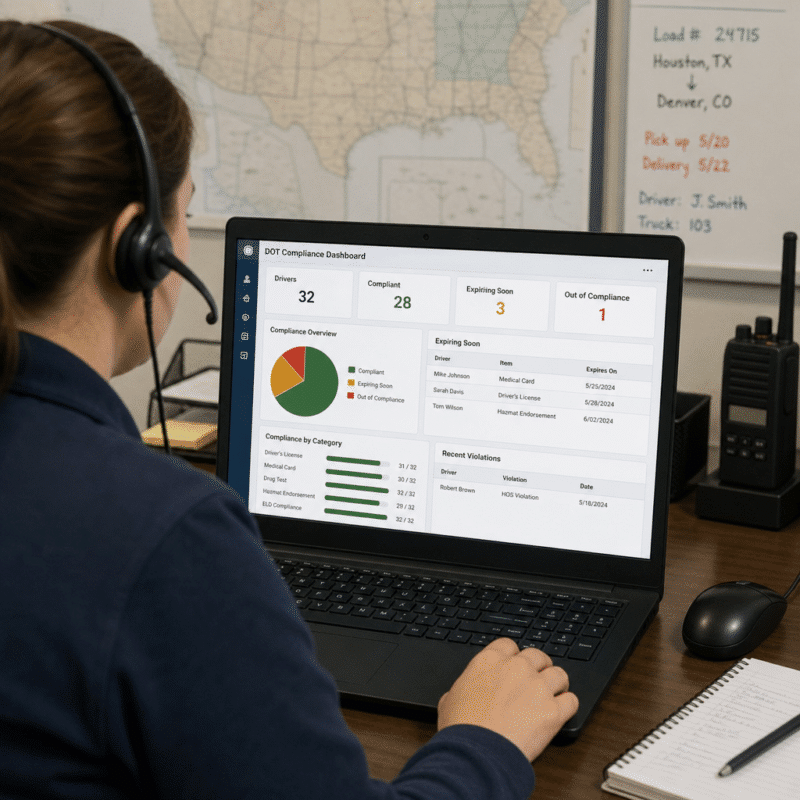
The tech layer behind compliance
Modern DOT consortium software helps with online driver lists, digital random draws, result tracking, policy files, and audit-ready storage. This speeds up the workflow and reduces paperwork.
This is useful because DOT testing is ongoing. Employers may need pre-employment tests, random tests, post-accident tests, reasonable-suspicion checks, return-to-duty steps, and follow-up tests. A digital system helps the team follow the same process each time.
For small carriers, that can mean fewer missed steps. For owner-operators, it can provide the structure they need for random testing. The FMCSA says owner-operators must join a consortium and participate in its random pool. (fmcsa.dot.gov)
Why a DOT drug and alcohol testing consortium matters for owner-operators
Owner-operators act as both employer and driver. That makes self-managed random testing a conflict. The consortium provides an independent process for random draws, notices, and records.
A good program also supports day-to-day business flow. When a driver is selected, the steps should be clear: where to go, when to go, what to bring, and how to file the result. Clear steps reduce delay and stress.
Common tech-supported tasks
A modern consortium may help with:
- Driver enrollment and roster updates
- Random pool administration
- Testing site coordination
- Record storage
- Clearinghouse support
- Policy and program files
These tools do not replace training or responsibility. They help the process stay steady.
The DOT consortium as a compliance tech model
The DOT consortium shows how regulated work uses technology. It is not flashy. It is practical. Transportation teams work under time pressure, so compliance tools need to fit into daily work.
A consortium platform can help in three ways. It keeps key data in one place. It creates a time-stamped history. It makes random testing easier to scale.
That is how tech supports trust. Regulators, drivers, and employers all benefit when testing is clear, consistent, and well documented.
Key benefits for small fleets and CDL businesses
A DOT consortium can be valuable for small fleets without a full compliance team.
Main benefits:
- Organized compliance records
- Lower admin burden
- Better random testing structure
- Support for owner-operator rules
- Clearer workflows during stressful events
Choosing a random drug testing consortium
Don’t choose a provider based on price alone. Look at how it fits your workflow.
Ask:
- Does the provider know DOT and FMCSA rules?
- Can it support your fleet size and type?
- How are random draws made and sent?
- What records can you get for an audit?
- How fast can drivers reach a test site?
- Does it help with Clearinghouse steps?
- What duties stay with you?
Using a consortium does not remove employer duties. The carrier still needs current rosters, up-to-date policies, and good internal processes.
How digital systems are changing DOT drug testing
Digital tools make compliance easier to track, search, and repeat. Employers can use dashboards, alerts, secure storage, and reminders instead of only phone calls and file cabinets.
Digital systems also connect different parts of compliance. The FMCSA Clearinghouse now holds certain violation data, and owner-operators who are employers must name a C/TPA there. (clearinghouse.fmcsa.dot.gov) When the consortium and the Clearinghouse work together, records stay more consistent.
Still, software cannot fix bad data. If the roster is wrong or notices are ignored, the system fails. Good results come from tech, provider skill, and employer follow-through working together.
Practical takeaways for transportation businesses
If you are looking at a DOT drug and alcohol testing consortium, think past signup. Think about how it will work over the next year.
Checklist:
- Confirm which drivers are covered
- Keep the roster current
- Enroll owner-operators when required
- Know who sends random notices
- Store policies and records in one place
- Review provider duties and employer duties
- Train managers on test steps
This turns the consortium into an active compliance system, not just a vendor.
The bigger impact on transportation technology
The DOT consortium fits a larger trend. Transportation compliance is becoming more digital and data-driven. Teams need to show what happened, when, and who handled the next step.
For owner-operators, a consortium gives access to a system they cannot build alone. For small fleets, it gives admin support without a large in-house team. For the industry, it helps make testing more consistent and safer.
The main point is simple: a DOT consortium is not just a formality. It is a tech-enabled compliance system that helps transportation businesses manage required testing, protect records, support audit readiness, and keep work moving.
Q&A
Question: Is a DOT consortium the same as a drug testing site?
Short answer: No. A DOT consortium is a compliance program, not just a collection site. It can also manage random draws, rosters, notices, records, and audit files.
Question: Why can’t an owner-operator handle random testing alone?
Short answer: The owner-operator is both the employer and the driver. That creates a conflict. The consortium gives them an outside random pool and the records needed to show compliance.
Question: Does using a consortium remove employer responsibility?
Short answer: No. The employer still must meet DOT and FMCSA rules, keep rosters current, and manage internal processes.
Question: How does technology help DOT drug and alcohol testing?
Short answer: It centralizes records, tracks random selections, sends notices, stores files, and creates a time-stamped trail. That lowers the chance of missed steps.
Question: What should a small fleet look for in a random drug testing consortium?
Short answer: Look for strong DOT and FMCSA knowledge, support for your type of business, clear random draw rules, audit records, fast test-site access, Clearinghouse help, and a clear role split between provider and employer.