


Best Practices for Driver Qualification Files

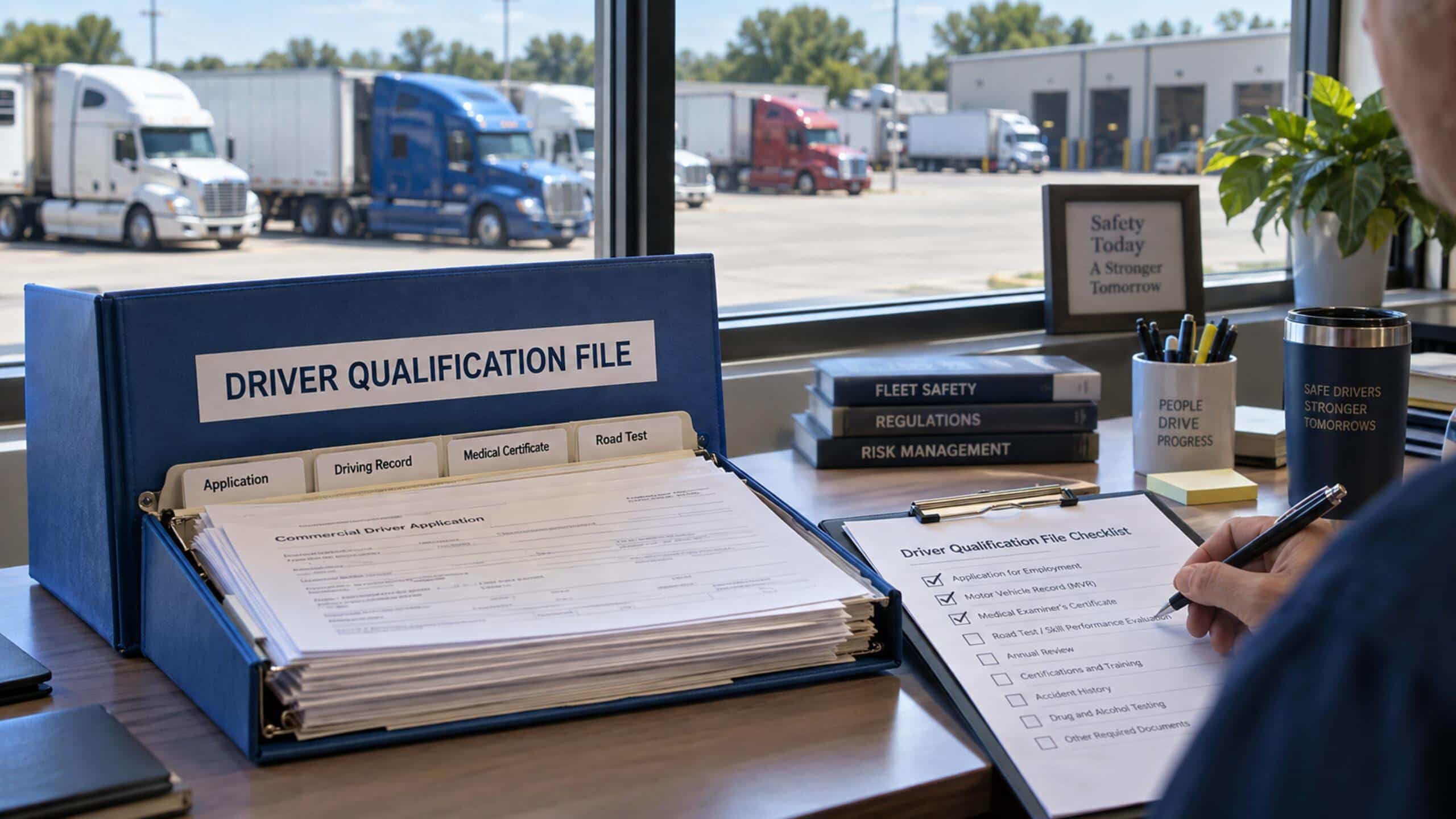
A driver qualification file is more than a folder of hiring paperwork. It is the working record that shows a driver is qualified, monitored, and supported throughout their time behind the wheel. Strong driver qualification file management helps fleets reduce administrative gaps, prepare for reviews, and keep compliance documentation organized before small oversights become expensive distractions.
For motor carriers, the goal is not simply to “have files.” The goal is to build a repeatable process that keeps every required document current, easy to find, and tied to the right driver. Whether you manage a small local fleet or a multi-state operation, the best practices below can make driver file management clearer, cleaner, and easier to sustain.
What belongs in a driver qualification file?
A driver qualification file generally includes the records a motor carrier uses to document that a driver meets applicable qualification requirements. FMCSA guidance states that motor carriers must maintain a driver qualification file for each employed driver, and 49 CFR § 391.51 identifies required file contents and retention requirements.
While specific requirements can vary by driver type and operating situation, a typical DOT driver qualification file management process should account for documents such as:
- A completed and signed driver application
- Motor vehicle record inquiries from applicable state licensing agencies
- Previous employer safety performance inquiries, when required
- Road test certificate or an accepted equivalent
- Medical examiner’s certificate or medical certification information, as applicable
- Annual motor vehicle record inquiry
- Annual review note for the driver’s driving record
- Certificates, waivers, exemptions, or variance documentation when applicable
FMCSA’s Safety Planner also notes that a checklist can help carriers confirm they obtain required documents and inquiries. That simple point is worth taking seriously: the best compliance systems are often built on ordinary habits done consistently.
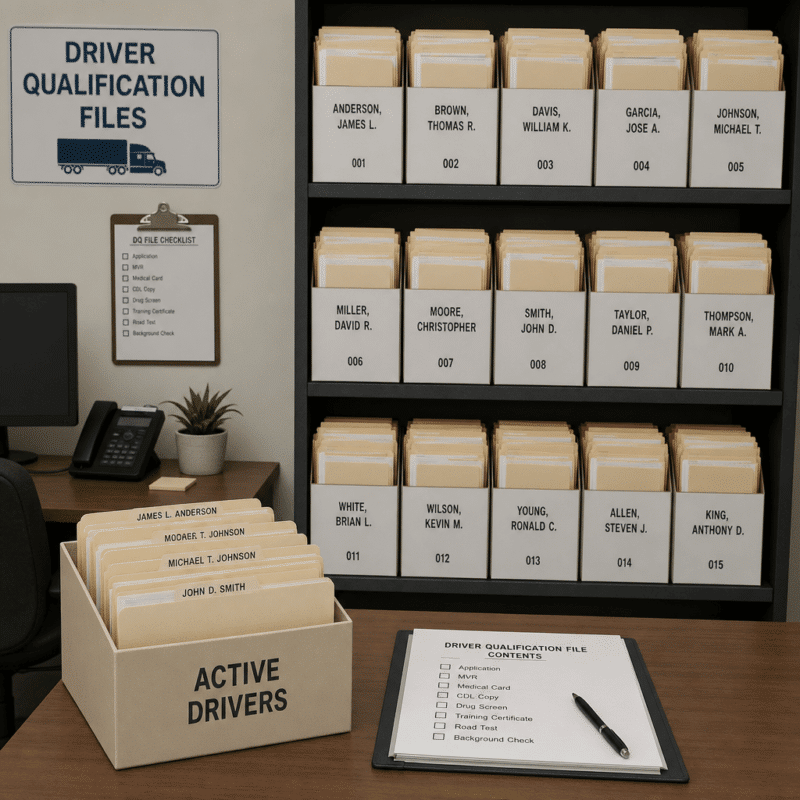
File management starts before the first dispatch
A common mistake is treating the driver qualification file as something to “clean up later.” By then, the driver may already be dispatched, the hiring team may have moved on, and missing details can be harder to chase. A better approach is to make the file part of the onboarding workflow, not an afterthought.
Before placing a driver in service, create a standard intake path. Decide who collects the application, who orders or reviews records, who verifies medical documentation, and who gives final approval. If several people touch the file, each step should have an owner and a clear handoff.
This is where driver file management becomes operational, not just administrative. A clean onboarding process reduces duplicate requests, gives recruiters and safety teams the same view of file status, and helps prevent a driver from slipping through with incomplete documentation.
A practical onboarding checklist should answer:
- Has the driver submitted a complete application?
- Have you initiated and documented required inquiries?
- Is the road test certificate or equivalent in place?
- Is medical qualification documentation current and matched to the driver?
- Has someone reviewed the complete file before dispatch?
- Is the file stored where authorized team members can access it quickly?
Centralized records reduce everyday risk
Driver qualification file management works best when records live in one controlled system, not across inboxes, shared drives, desk drawers, and payroll folders. Fragmented records create uncertainty. A document may exist somewhere, but if the compliance team cannot find it during a review, it may not help when it matters.
Centralization also makes routine work easier. Safety managers can see which files are complete, which documents are pending, and which renewals are approaching. HR can support hiring without becoming the long-term owner of compliance documentation. Operations can confirm that a driver is cleared without digging through paperwork.
For many fleets, this is the point where driver qualification file management software becomes useful. Software does not replace judgment, but it can support consistent naming, controlled access, digital reminders, expiration tracking, and cleaner audit preparation.
If you are evaluating software or driver qualification file management services, look for tools and partners that support:
- Driver-level document checklists
- Expiration and renewal alerts
- Secure digital storage
- Permission-based access
- Notes or activity history
- Reporting by driver, location, terminal, or file status
- Easy document export for internal reviews
- Workflows that match how your fleet actually operates
Why do DQ files fall out of compliance?
Driver qualification files usually fall out of compliance because ownership is unclear, renewals are not tracked, and documents are collected without a repeatable review process. The issue is rarely one dramatic mistake. More often, it is a series of small gaps that build up over time.
For example, a driver may start with a complete file, but the annual motor vehicle record inquiry is missed. A medical certificate may expire without an alert. A document may be saved under the wrong name. A terminal may run its own local process that doesn’t match the company standard.
The fix is to treat compliance as a calendar-driven process. Every required recurring item should have a due date, an owner, and a backup owner. If your system relies on one person remembering every renewal, the process is too fragile.
Strong fleet driver management connects driver qualification records to the broader driver lifecycle. Hiring, onboarding, renewals, status changes, leaves of absence, terminations, and rehires should all trigger file review. When the driver’s status changes, the file should change with it.
Internal audits keep surprises small
Internal audits are one of the most useful habits in DOT driver qualification file management. They give you a chance to find missing, expired, misfiled, or inconsistent documentation before an outside review exposes it. They also help confirm whether your written process is actually being followed in daily operations.
You do not need to audit every file every week. Instead, build a cadence that fits your fleet size and risk profile. A smaller fleet may review all driver files quarterly. A larger organization may sample files by terminal, business unit, or driver type each month.
During an audit, do more than check whether a document exists. Review whether the document is complete, legible, current, and assigned to the correct driver. Confirm that annual items were completed on time. Look for duplicate versions that may cause confusion. Note process issues, not just file issues.
A useful internal audit routine includes:
- Selecting a defined group of drivers to review
- Checking each file against a current checklist
- Recording missing or questionable items
- Assigning corrective actions with due dates
- Verifying completion after corrections are made
- Looking for patterns across multiple files
If the same issue appears repeatedly, solve the workflow problem behind it. For example, if medical documents are often late, add earlier reminders. If applications are often incomplete, improve the onboarding review before the driver moves forward.
Digital systems need clear rules, too
Going digital can improve speed and visibility, but only if the system is organized. A messy digital archive is still messy. Without standards, teams may upload blurry scans, use inconsistent file names, store documents in the wrong profile, or keep outdated copies alongside current ones.
Set simple rules that everyone can follow. Define document categories. Use consistent naming conventions. Decide whether old records should be archived, replaced, or retained in a separate historical section. Limit editing access to people who need it, while still allowing managers to view status information.
Security also matters. Driver qualification files may contain sensitive personal and employment information, so access should match job responsibilities. A good system should make it easier to do the right thing: upload the document once, attach it to the correct driver, and keep it available for authorized review.
If your internal team is stretched, driver qualification file management services can provide structure, routine monitoring, and administrative support. The best fit is usually a service that helps your team stay in control rather than turning compliance into a black box.
Retention and retrieval deserve equal attention
A file that is complete but impossible to retrieve quickly still creates stress. FMCSA has addressed scenarios involving the ability to produce driver qualification files during a review, which is why retrieval should be considered part of compliance readiness, not merely an office convenience.
Build your storage process around the moment someone asks for a file. Can your team find the right driver quickly? Can they distinguish current documents from archived ones? Can they export a clean file without exposing unrelated personnel information? Can another trained person do the same if the primary administrator is out?
Retention is just as important. Because 49 CFR § 391.51 covers retention requirements, fleets should align their internal procedures with current regulatory obligations and avoid guessing about how long to keep specific records. When in doubt, review the official regulation or consult qualified compliance counsel.
Training turns policy into habit
Even the best written policy fails if the people using it do not understand it. Train recruiters, safety personnel, terminal managers, and anyone else involved in driver records. Keep the training practical: show what a complete file looks like, where documents belong, how to flag problems, and when to escalate questions.
Training should also cover the “why.” A driver qualification file is not paperwork for paperwork’s sake. It supports safer operations, clearer decision-making, and more consistent oversight. When teams understand that connection, they are more likely to treat each step with care.
Use short refreshers when processes change. If you add software, revise forms, or centralize files from multiple locations, do not assume everyone will adapt automatically. A 20-minute walkthrough can prevent months of inconsistent use.
A practical DQ file improvement plan
If your current process feels scattered, start with a focused improvement plan instead of trying to fix everything at once. The goal is to create momentum and reduce the highest-risk gaps first.
Here is a practical sequence:
- Inventory active drivers. Confirm that every active driver has a file and that each file is tied to the correct location or operating unit.
- Create or update your checklist. Use a checklist that reflects current requirements and the types of drivers you employ.
- Review high-risk items first. Prioritize missing applications, medical documentation, road test records, annual MVRs, and annual reviews.
- Assign ownership. Decide who is responsible for onboarding files, recurring renewals, internal audits, and final quality control.
- Centralize storage. Move records into one controlled process, whether digital, physical, or hybrid.
- Set reminders. Track expiration dates and recurring annual tasks before they become overdue.
- Schedule recurring audits. Review a sample of files regularly and document corrective actions.
- Review after changes. Recheck files when drivers transfer, return, change status, or leave the company.
For fleets that want outside support, fleet compliance services can help build a more consistent process, while DOT audit support can help teams prepare records before a review.
Better files create calmer compliance
Driver qualification file management is not about making paperwork look perfect. It is about building a dependable system that shows who is qualified, what has been reviewed, what is expiring, and what still needs attention. When that system is clear, teams spend less time searching and more time managing the fleet.
The best approach is simple: start early, use a checklist, centralize records, track renewals, audit regularly, and train the people responsible. With the right process, driver qualification files become a steady part of fleet driver management instead of a recurring source of stress.