


Understanding Reasonable Suspicion in Law Enforcement


Reasonable suspicion is one of the most important and most misunderstood decision points in law enforcement and safety-sensitive workplaces. Done well, it protects the public, supports officer and employee wellness, and reduces liability. Done poorly, it can violate employee privacy rights during testing, undermine morale, and expose an agency to claims of discrimination or retaliation. This guide breaks down what reasonable suspicion is, how it differs from higher legal standards, and how reasonable suspicion training helps supervisors and leaders apply consistent, defensible practices.

What “Reasonable Suspicion” Means (and What It Doesn’t)
Reasonable suspicion is a fact-based belief—grounded in specific, articulable observations—that a person may be impaired, violating policy, or engaged in criminal activity. It is not a hunch, rumor, or personality conflict.
Reasonable suspicion vs probable cause
A common training gap is reasonable suspicion vs probable cause:
- Reasonable suspicion: Lower threshold. Requires objective observations that can be explained clearly. Often supports brief detention, further inquiry, or workplace testing under policy.
- Probable cause: Higher threshold. Requires a fair probability that a person committed an offense; often supports arrests or search warrants (depending on context).
A practical takeaway: reasonable suspicion is about what you can point to, not what you “feel.”
Why Reasonable Suspicion Training Matters in Law Enforcement and the Workplace
In law enforcement, reasonable suspicion decisions must be made quickly under pressure. In workplaces—especially safety-sensitive roles—supervisors also need a structured approach for “observe, document, act.”
High-quality reasonable suspicion training for supervisors improves:
- Consistency across shifts and units
- Documentation quality (the #1 factor in defensibility)
- Fairness and professionalism in employee interactions
- Compliance with internal policy and external regulations (including transportation rules)
If you’re building a broader program, pair this with a clear policy and documentation workflow—see our Workplace Drug & Alcohol Policy Toolkit.

DOT Reasonable Suspicion Requirements: What Supervisors Must Know
Many agencies and contractors operate under federal transportation rules. DOT reasonable suspicion requirements generally expect trained supervisors to determine whether testing is warranted based on contemporaneous observations.
To meet expectations, many organizations use:
- DOT supervisor training
- dot drug and alcohol training
- supervisor drug and alcohol training
- drug and alcohol training for supervisors
- dot drug and alcohol supervisor training
- supervisor drug alcohol awareness training
- dot drug and alcohol training certificate and/or dot reasonable suspicion training certificate (often used to document completion)
In practice, a defensible program documents that supervisors received reasonable suspicion supervisor training and can apply the standard consistently.
For a step-by-step rollout plan, reference our Supervisor Compliance Training Guide.
What Triggers Reasonable Suspicion Testing?
Leaders often ask what triggers reasonable suspicion testing. The answer is: observable, objective signs that are timely, specific, and connected to performance or safety risk—not stereotypes or medical assumptions.
Common triggers include:
- Marked changes in speech (slurred, incoherent, unusually loud/quiet)
- Unsteady gait, loss of balance, slowed reaction time
- Odor of alcohol or marijuana-like odor (note: odor alone is rarely enough)
- Visible paraphernalia or direct observation of use
- Erratic mood swings paired with performance/safety concerns
- Driving or equipment-operation concerns (near-misses, unsafe maneuvers)
- Credible admission of use or impairment
Signs of drug impairment at work: what to look for
A core outcome of impairment recognition training alternatives and standard programs is learning to identify signs of drug impairment at work without diagnosing. Focus on behavior and performance, such as:
- Appearance: bloodshot eyes, poor coordination, unexplained sweating
- Behavior: confusion, paranoia, inappropriate laughter, agitation
- Performance: repeated errors, missed steps, safety violations
- Physiological cues: tremors, slowed movements, unusual pupil size (if observable)
Important: supervisors are not clinicians. Good reasonable suspicion training teaches you to observe and document, not label conditions.
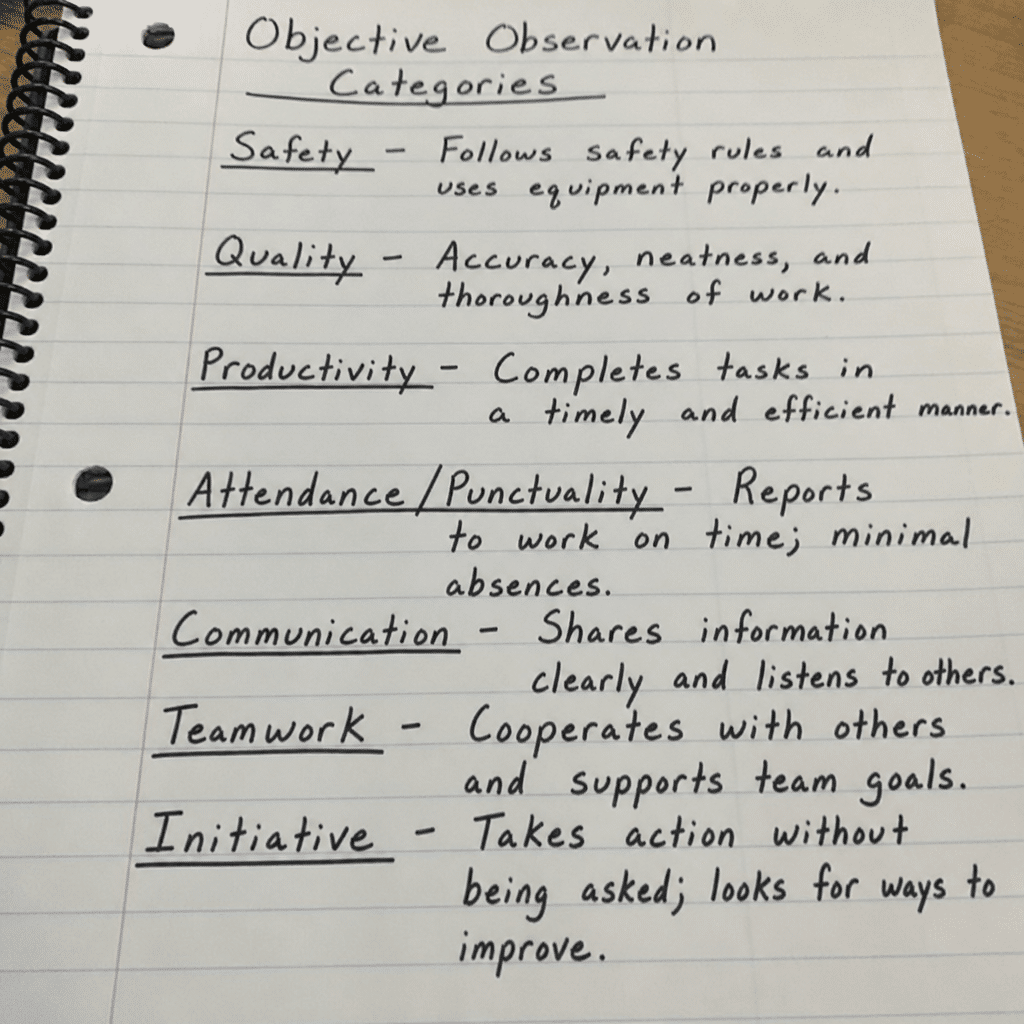
A Reasonable Suspicion Checklist for Supervisors (Use This Every Time)
A consistent checklist reduces bias and strengthens legal defensibility. Here’s a practical reasonable suspicion checklist for supervisors:
- Immediate safety: Remove the employee/officer from safety-sensitive duties if needed.
- Observe objectively: Note what you directly see/hear/smell (not conclusions).
- Confirm timeframe: Are observations current and relevant to the shift?
- Seek corroboration: When possible, have a second trained supervisor observe.
- Check policy triggers: Ensure the situation fits your testing criteria.
- Document promptly: Capture specific facts while memory is fresh.
- Communicate professionally: Explain next steps without accusation.
- Arrange transport: Do not allow impaired driving; escort as required.
- Maintain confidentiality: Share only with those who need to know.
- Follow chain-of-custody rules: Ensure procedures are correct end to end.
If you want a ready-to-use template, see our Reasonable Suspicion Documentation Templates.
How to Document Workplace Suspicion (So It Holds Up)
One of the most searched needs is how to document workplace suspicion in a way that stands up to internal review, grievances, or litigation. Strong documentation is:
- Specific: “stumbled twice while walking 20 feet” vs “acted drunk”
- Timed: include exact times of observations and actions
- Factual: quote exact statements; avoid interpretation
- Complete: who observed what, where, and under what conditions
- Policy-aligned: connect observations to policy language
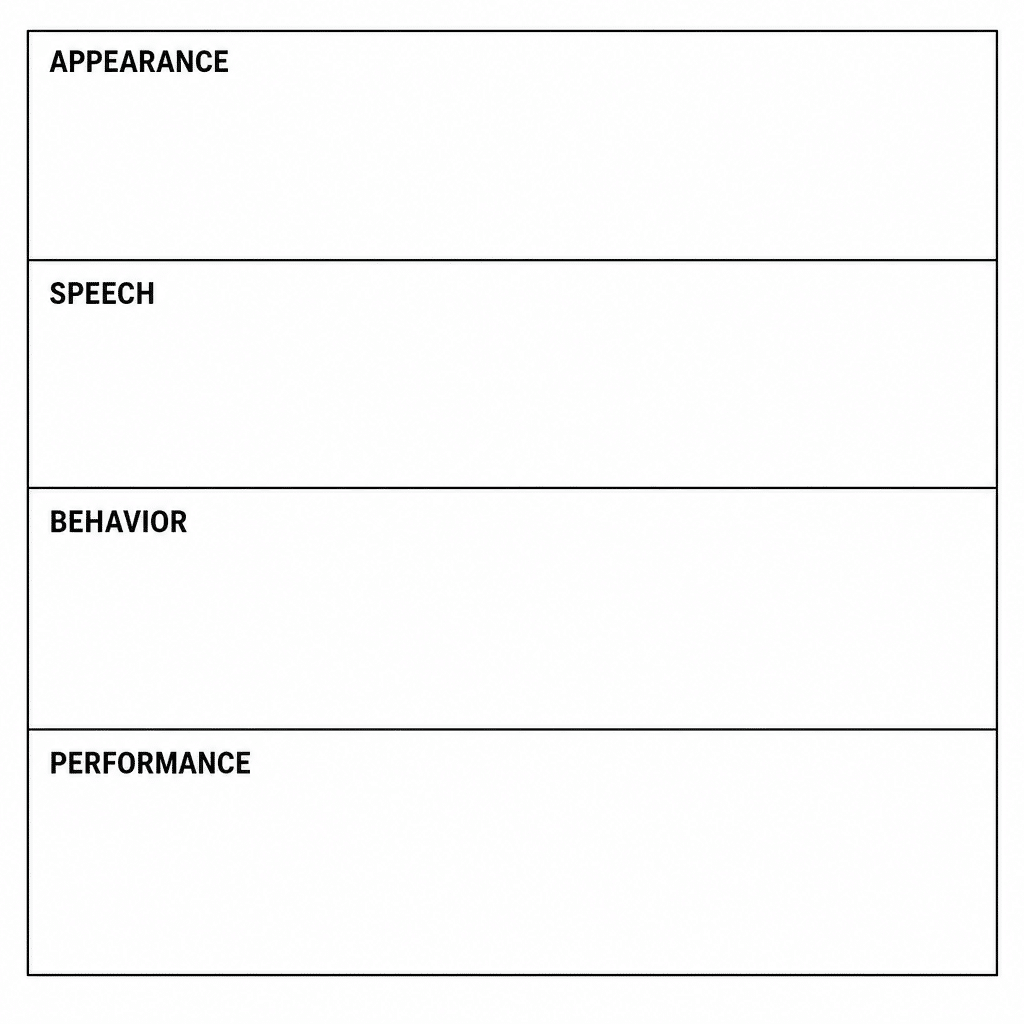
Sample reasonable suspicion report form (what it should include)
A robust sample reasonable suspicion report form typically captures:
- Employee name/ID, role, and safety-sensitive duties
- Date, start/end time of observation window
- Observation categories:
- Appearance
- Behavior
- Speech
- Odor
- Motor skills/coordination
- Work performance/safety issues
- Specific incidents (near-miss, rule violation, citizen complaint)
- Names of witnesses/second observer
- Actions taken (removed from duty, transport arranged, testing ordered)
- Notifications (HR, command staff, DER if applicable)
- Signature lines with date/time
Tip: Write as though a neutral third party will read it six months later.
When to Order Post Accident Testing: Avoid Common Mistakes
Another high-liability area is when to order post-accident testing. Post-incident decisions must follow your policy, applicable laws, and any DOT requirements for covered roles. Avoid the two extremes:
- Over-testing: ordering tests automatically after any minor incident without policy support
- Under-testing: skipping testing after serious safety events due to discomfort or uncertainty
Use a simple decision frame:
- Was there an accident/incident meeting policy criteria (injury, fatality, significant damage, near-miss with high potential)?
- Is there a reasonable basis to believe impairment may have contributed (observations, behavior, safety violations)?
- Are you within required time windows for collection (if DOT-covered)?
- Can you document the rationale clearly?
If the incident is primarily performance-based with no accident, revert to your reasonable suspicion checklist rather than post-accident logic.
Employee Privacy Rights During Testing and How to Respect Them
Reasonable suspicion actions can feel intrusive. Protecting employee privacy rights during testing is both ethical and risk-reducing:
- Share information on a need-to-know basis only
- Avoid public escorts or humiliating language
- Provide same-gender observer protocols where policy requires
- Ensure secure storage of forms and results
- Use neutral phrasing: “Based on documented observations, we are following policy.”
Also consider accommodations and medical explanations—without letting them replace documented safety decisions. When in doubt, involve HR/legal/DER per your process.
Legal Risks of Improper Testing (and How Training Reduces Them)
The legal risks of improper testing often arise from inconsistency and poor documentation, including:
- Disparate treatment claims (different decisions for similar behavior)
- Retaliation allegations (testing after protected activity)
- Wrongful discipline claims based on unsupported conclusions
- Privacy violations and confidentiality breaches
- Chain-of-custody errors that invalidate results
High-quality reasonable suspicion training—especially reasonable suspicion training for supervisors—reduces these risks by standardizing observation language, decision thresholds, and documentation practices.
Choosing the Right Program: Online, Interactive, and Certificate-Based Options
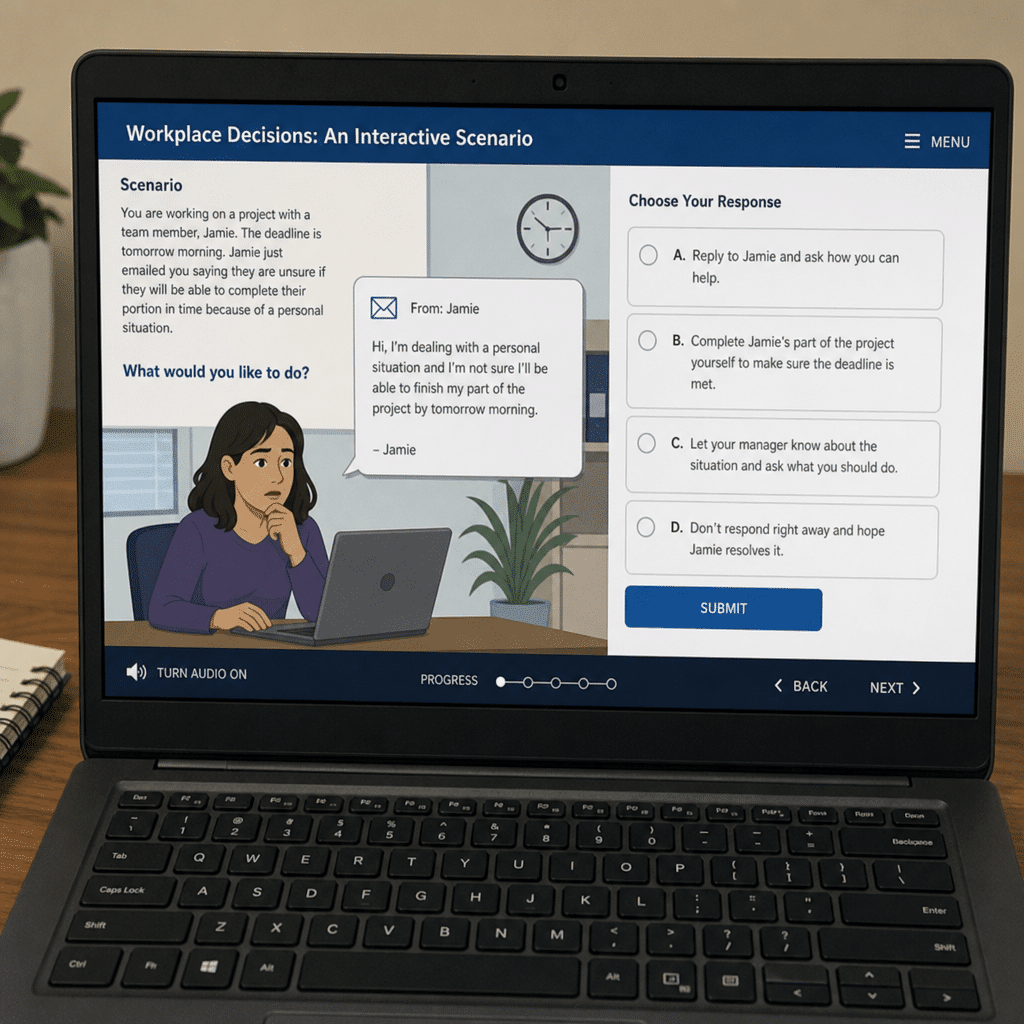
Organizations often want an interactive supervisor compliance course that is repeatable, auditable, and easy to deploy across shifts. When evaluating the best online supervisor training program, look for:
- Scenario-based practice (not just slides)
- A skills test, not only “seat time”
- Clear coverage of alcohol vs drug indicators
- Documentation drills using realistic forms
- Alignment with DOT reasonable suspicion requirements if applicable
- A completion record such as a DOT reasonable suspicion training certificate (and/or DOT drug and alcohol training certificate) to support audits
If you’re comparing formats, consider impairment recognition training alternatives (e.g., enhanced behavioral observation modules, fatigue and stress recognition) as supplements—not replacements—for reasonable suspicion instruction.
Substance Abuse Policy Implementation Guide: Make Training Stick
Training works best when it’s paired with a system. A simple substance abuse policy implementation guide approach includes:
- Clear definitions (reasonable suspicion, post-accident, return-to-duty)
- Roles and escalation paths (supervisor, HR, DER, command)
- Standard forms and a secure documentation process
- Consistent consequences and supportive resources (EAP, referral pathways)
- Annual refreshers and scenario reviews
Most failures are process failures—not knowledge failures.
Key Takeaway
Reasonable suspicion is a disciplined, observable, documentable standard—not intuition. With consistent checklists, strong documentation practices, and credible DOT supervisor training (including dot drug and alcohol supervisor training where required), supervisors can make fair decisions that protect safety, respect rights, and reduce liability.