


FMCSA Clearinghouse Compliance Guide for CDL Drivers and Employers

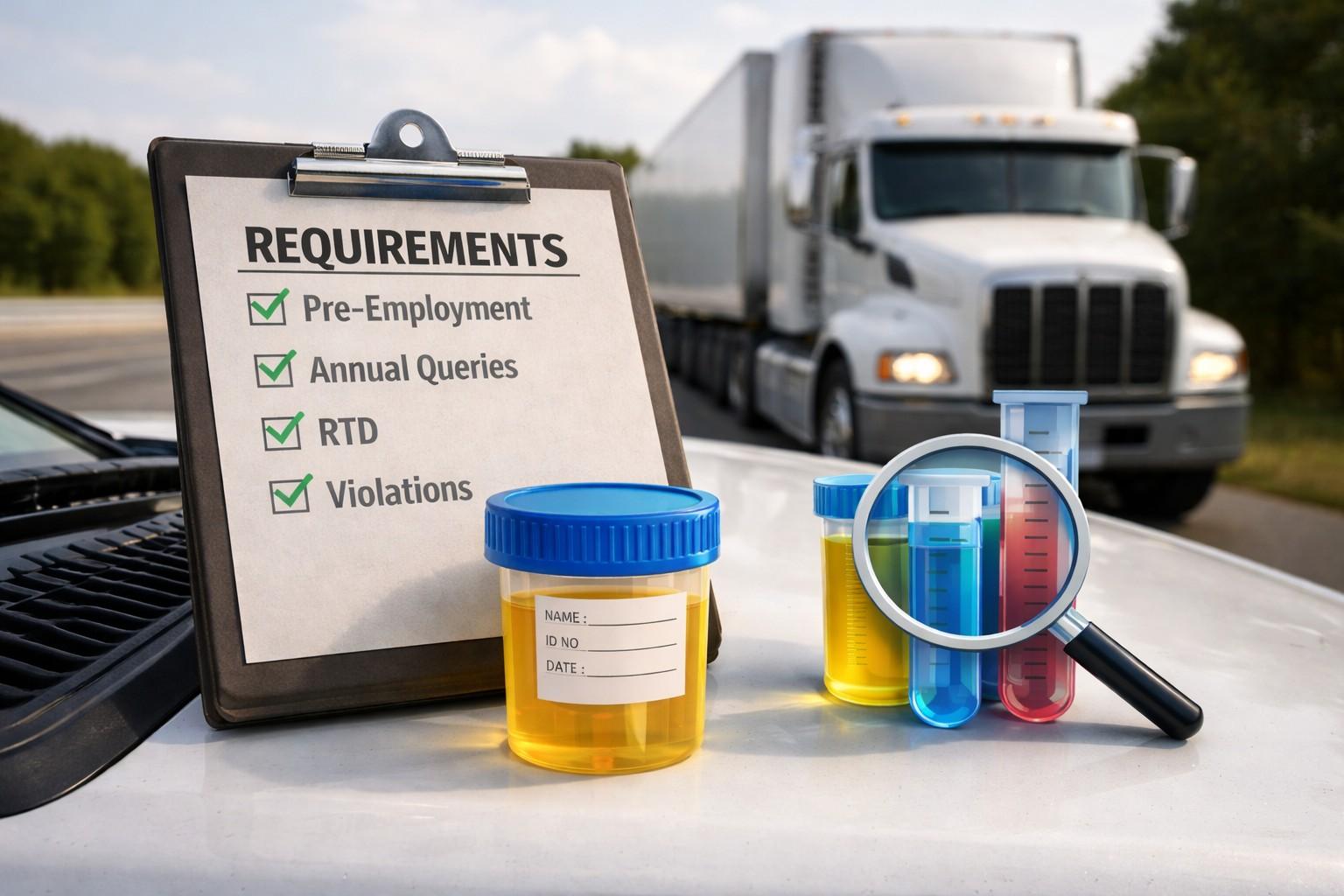
If you hire CDL drivers or you drive under a commercial driver’s license, you cannot treat the Clearinghouse like “admin work.” FMCSA Clearinghouse compliance affects onboarding, annual checks, and what happens after drug and alcohol violations. When you follow clearinghouse requirements, you protect your operation, reduce audit risk, and keep drivers eligible for safety sensitive work.
This guide explains FMCSA Clearinghouse compliance in plain language, including annual queries, pre employment queries, medical review officers MROs, substance abuse professionals SAPs, and the return to duty process.
FMCSA Clearinghouse compliance starts with clearinghouse requirements
The system supports federal motor carrier safety rules. Employers use it to run queries, and authorized parties report violations when DOT rules require it. Think of clearinghouse requirements as a checklist you must follow, not a set of tips.
At a high level, FMCSA Clearinghouse compliance includes:
- Running the right queries at the right time
- Getting driver consent when needed
- Staying on schedule with annual queries
- Reporting violations correctly
- Following the return to duty RTD process when a driver has a violation
When you ignore clearinghouse requirements, you risk placing a driver who cannot legally perform safety sensitive work. That can trigger serious problems during a compliance review.
Who is required to register
Many users are required to register. Employers must register to manage their account and complete queries. Drivers should register too, because the system may require driver actions such as giving consent or viewing status. If a driver does not register, that driver can lose time during onboarding or during a return to duty process.
Registration is not a “maybe later” task. For strong FMCSA Clearinghouse compliance, treat registration as part of day one onboarding, right next to driver’s license CDL verification and policy signing.
Pre-employment queries and annual queries
Two key parts of the clearinghouse requirements come up frequently.
Pre-employment queries happen before an employer allows a driver to start safety-sensitive work. If you hire drivers, you run pre employment queries as part of every hire. If a driver has an unresolved record tied to drug and alcohol violations, the driver cannot start safety-sensitive duties.
Annual queries happen after hiring. Employers must run annual queries at least once every 12 months for each driver. This is not optional. If you want reliable FMCSA Clearinghouse compliance, schedule annual queries on a fixed calendar and track them like renewals.
Drivers should understand this, too. Annual queries do not mean the employer suspects something. Annual queries exist because clearinghouse requirements demand ongoing checks.
Drug and alcohol testing and what gets reported
The Clearinghouse connects tightly to DOT drug and alcohol testing. Not every company policy issue belongs in the system, but certain DOT drug and alcohol program violations do. Employers and other authorized parties must report violations when rules require it. That includes drug and alcohol violations and alcohol program violations, such as certain positive results and refusals.
Medical review officers MROs matter here. MROs review lab results and verify them under DOT rules. When an MRO verifies a positive test or confirms a refusal, that result can trigger a report. That is why you should treat your processes like a chain. Collection steps, documentation, and correct routing all support FMCSA Clearinghouse compliance.
Substance abuse professionals SAPs and the return to duty process
After a reported violation, the driver cannot return to safety sensitive work until they complete the return to duty process. This is where substance abuse professionals SAPs step in. SAPs evaluate the driver and set a plan. The driver must follow that plan and complete the required steps.
Here is the return to duty RTD flow in real terms:
- SAP evaluation
- Driver completes the SAP plan
- SAP records completion in the system after the driver completed the return steps
- Driver completes return to duty RTD testing
- Follow up testing continues based on the SAP plan
Many delays happen because drivers start the SAP process but do not finish it, or because the paperwork does not match the timeline. Clear documentation keeps the duty RTD process moving.
How to avoid common compliance problems
Most issues come from missed basics, not from complex rules.
To meet clearinghouse requirements consistently:
- Build pre employment queries into every hiring checklist
- Put annual queries on an automated schedule with reminders
- Train your team on what “report violations” means under DOT rules
- Keep your MRO process clean and documented
- Have a clear SAP workflow ready before you need it
- Treat every drug and alcohol violation as urgent, not as “next week.”
When you run your program this way, FMCSA Clearinghouse compliance no longer feels like a crisis. It becomes routine.
Where to get help
If you need support with queries, documentation, and the full workflow, choose a service that handles these daily. Start here: Clearinghouse Services.
If you build your process around FMCSA Clearinghouse compliance and you follow clearinghouse requirements without shortcuts, you reduce downtime, improve hiring speed, and keep your operation aligned with the federal motor carrier safety system.