DOT Reasonable Suspicion Training Requirements Explained


DOT has training requirements for supervisors. This helps them notice early signs of alcohol or drug misuse. They can then begin testing in accordance with DOT rules.
If you manage CDL drivers or anyone driving commercial vehicles, you need to train supervisors first. This training is important before facing real situations on the yard or at a customer site.
What are DOT reasonable suspicion training requirements?
Supervisors must complete DOT training in accordance with federal motor carrier safety rules. This training helps them recognize signs of drug or alcohol misuse.
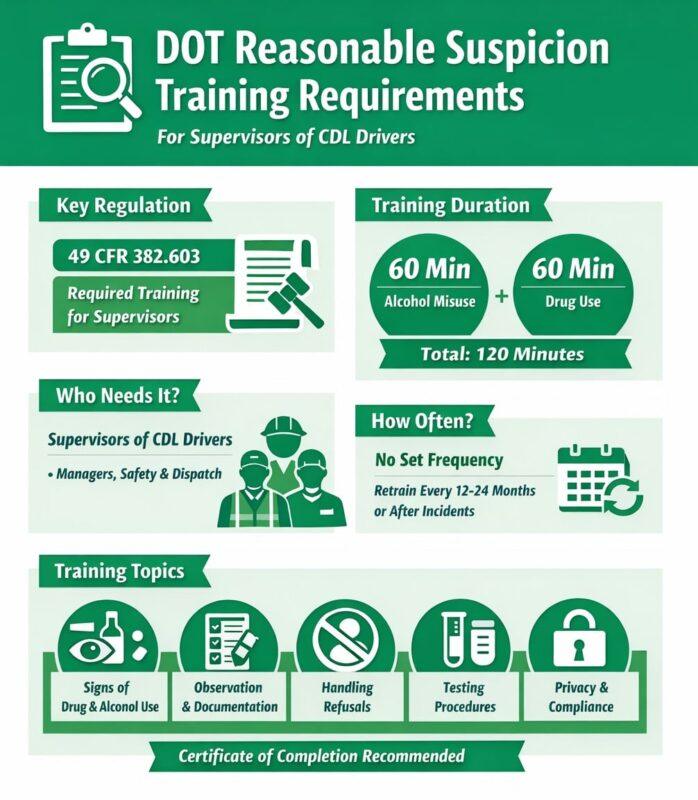
The key rule to know is 49 CFR 382.603. It requires training for persons designated to supervise drivers, meaning the people who can direct a driver to undergo suspicion testing. This includes managers, dispatch leads, safety staff, and any other persons designated to supervise.
The training must cover both drugs and alcohol. For alcohol, the course must last at least 60 minutes. For controlled substances, the course must also last at least 60 minutes. Most programs bundle this into a single, dot-reasonable-suspicion training course and issue a certificate of completion at the end.
This training supports your dot drug and alcohol program. It protects drivers, the public, and your company when supervisors need to act fast and document what they saw and why they acted.
How often is DOT reasonable suspicion training required?
DOT does not set a repeating schedule. There is no federal rule requiring you to renew every year or every two years. You must complete the training before a supervisor can make a reasonable suspicion decision, and you should refresh it when you hire or promote new supervisors or when performance shows gaps.
Now the practical part. The Department of Transportation (DOT) does not require a set renewal frequency. However, many employers retrain regularly to stay consistent and lower risk.
A standard internal policy uses refresher training every 12 to 24 months, plus immediate retraining after any incident, near miss, or recordkeeping problem. This sustains the required knowledge and keeps supervisors confident when a situation escalates.
What should the training actually teach supervisors?
A strong, reasonable-suspicion training program stays realistic. It teaches supervisors how to observe and document behavior, appearance, speech, and body odors that may indicate drug or alcohol use. It also explains what not to do, such as diagnosing medical conditions or making assumptions without specific observations.
Good training also covers:
- When suspicion testing applies during on-duty time
- How to separate the driver from safety-sensitive work
- How to follow your drug testing procedures
- How to handle refusal scenarios and the following steps
- How to keep records and protect privacy
Who needs this training?
Any person designated to supervise CDL drivers needs it if they can initiate suspicion testing. If your operation involves commercial motor vehicles, treat this training as core compliance, not an optional add-on. When supervisors know the rules and follow them consistently, you reduce liability and keep your dot drug and alcohol program strong.